I’ve been struggling with this pervasive sense – on social media, in the mainstream media, in pop culture, in everyday discussions – that our country is at war with itself. Trump’s election win seems to be the culmination of a host of unsettling, depressing trends that have stoked fear, anger and anxiety. Those trends include (but are certainly not limited to):
-Hyperpolarization fueled by filtered news feeds and the rise of fake news
-Increasingly antagonistic partisan politics and the collapse of bipartisan political efforts (which fuels a collapse in our collective faith in the effectiveness of government institutions)
-Identity politics that sow divisiveness and reject unity / identity politics that raise issues Americans aren’t ready or willing to accept as reality and honestly discuss (the perception of that issue pretty much breaks down along party lines)
-The mainstreaming of the alt-right and the rise of white identity politics, aided and abetted by our President-elect, who has named a champion of the alt-right as his chief strategist
-A resurgence of openly practiced white supremacist views (the KKK rides again, this time often greeted by counter-protesters; Nazi imagery and its “cute” viral meme equivalent, Pepe the Frog, jump from dark corners of the Internet to street corners; anti-Muslim, anti-Semitic, anti-black, anti-immigrant … all these views and practices that had been demonized and marginalized in the name of human decency now are being heralded as a way to “Make America Great Again”)
-Numbness over the sheer volume of stories (now often accompanied by multimedia, including live video feeds) that dramatize the corrosive, violent, heartbreaking effects of police brutality, a penal system designed to enslave minorities and entrap all those who lack the financial resources to fight the system, and the horrifying intersections of domestic violence, sexual assault, misogyny, and sexism that add up to create a patriarchal rape culture
-The failure of our political system to adequately provide healthcare, in particular mental health care, and the tragic effect that failure has on the poor, the marginalized, the mentally ill, the disabled, the young, the old, and any who seek to find affordable, compassionate care for loved ones who fit into those categories
-The rise of drug addiction and substance abuse rates (our collective failure to invest in mental health care, coupled with a pervasive social stigma surrounding mental illness; the rise of hopelessness associated with the lingering effects of the Great Recession; and a penal system that favors incarceration over treatment has led to trends as diverse as the rise of meth in the Midwest and the West; the rise of heroin addiction, including among white populations in the Midwest and Northeast who had thought themselves immune to the drug wars; a growing acceptance of both medical and recreational marijuana use; and the glamorization of alcohol abuse as a sign of “female empowerment”)
-The dramatic success of the LGBTQ community in demanding and gaining increased rights, accompanied by an equally dramatic backlash, in particular against those who identify as transgender
-A willingness to accept the erosion of civil liberties in the name of national security and the related rise of the surveillance state, along with a growing fear of cyber-insecurity and a return of Cold War politics pitting Russian intelligence operatives against American intelligence operatives and featuring world leaders willing to put the nuclear option back on the table
-A willingness to consider a more authoritarian head of state in the name of protecting the American people – from terrorism, foreign or domestic; from racially-charged violence; from immigrants and/or refugees; from foreign competition in the trade market and in the labor market; from political correctness run amok; from the lies the “lamestream media” tell – you name it; the list of threats, real or perceived, is long
So yes, there is no shortage of conflict in today’s America. However, to say the country is at war with itself is, in my mind, a dangerous phrase because it downplays the fact that our country is still at war.
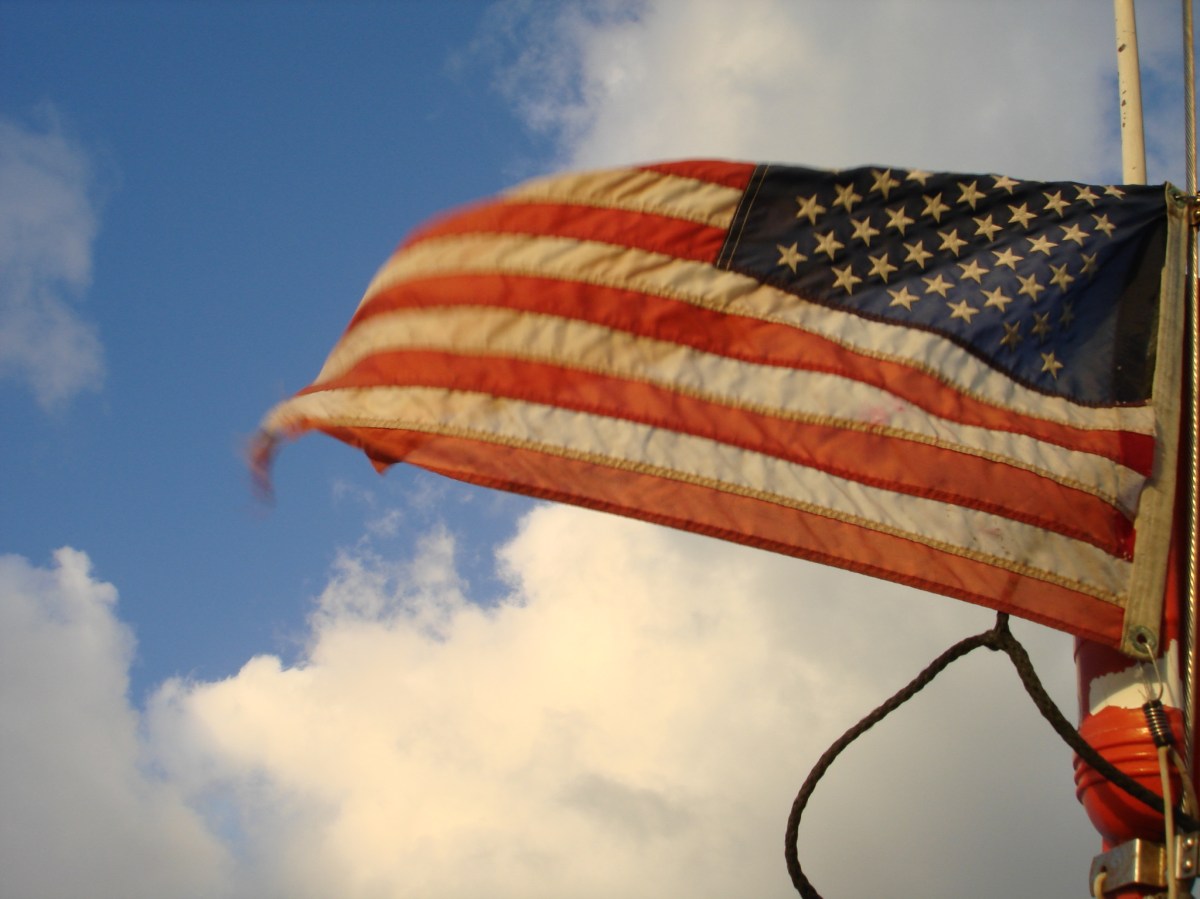
We are at war.
We have been at war since 2001.
Sometimes we call it war.
Sometimes we call it fighting terrorism.
Either way, it was particularly unsettling to me to realize that the majority of my high school students this year were born into a post-9/11 world.
They have no standard of comparison. Peacetime is a memory. A story. A sort of myth that the old folks tell when they speak of the good ole days.
I had a freshman student tell me that she understood the idea that the Clintons had faced virulent conspiracy theories for years because she had heard the theory that Bill Clinton was friends with Osama Bin Laden. When I pressed her on that, she told me that she had heard that Bush was also friends with Osama. When I reminded her that George W. Bush started two wars, one in direct retaliation against Bin Laden’s attack on the United States, she said, “What war?”
You know the phrase “my jaw hit the floor”? I have never understood that phrase until that moment.
This student is bright. She works hard. She’s relatively well-informed about current events compared to a lot of her peers. She attends a rigorous, college-prep high school. She is a freshman. She was completely unaware that President Bush had started a war. Two wars.
Sometimes the word “horrifying” is inadequate.
This is the same student who looked at a FiveThirtyEight projection map a few days before the election and said, “Oh, so Oklahoma is our enemy.”
This student lives in San Jose. The Bay Area is a hyper-liberal bubble. I tell my students that all the time. I tell them stories of my time in Tulsa and of my time in Durham. My CEO, who is the Board Chair of the California Charter Schools Association, said, “Where’s Tulsa?” during an all-org meeting, right after she had given a speech about how our organization values the dissemination of innovative best practices in the field of personalized learning and how we were going to restructure summer school to include efforts to train school leaders in cities across the United States and how those networking efforts were premised on the idea that it is valuable to talk to those who are different from you. I would believe she was kidding, except I think of myself as a decent student of American geography and I had to double-check what state Tulsa was in when Teach for America assigned me to be part of its Tulsa Charter Corps in 2009. There’s a famous song about traveling that includes a line that plays with the idea that many people think Tulsa is in Arizona.
I understand that teaching, by its very nature, is a fight against ignorance. I understand that kids, by their very nature, are uninformed. I understand that is my job to stand on the front lines and try and teach young people, some of whom will rule the world someday, about the history of their country and how that history sparked the trends that culminate in today’s current events.
I teach journalism. I have also taught a lot of English literature courses. Sometimes literature courses are easier emotional loads because all you have to do is remind students that all literature is about sex and death (or love and mortality, depending on how high-minded you want to be that day). Sometimes literature is comforting because it reminds us of our shared humanity. It offers a path to immortality. Sometimes literature is horrifying and sorrow-inducing because it reminds us of our collective human flaws, the corrosive, corrupting nature of power, insatiable human greed, the constancy of violence, the inevitability of tragedy, the inescapability of death, loss, and grief, and the idea that life is pain.
“Life is pain, highness. Anyone who says differently is selling something.” That quote is one of my favorite lines, from one of my favorite movies. I once gained a lot of street cred with a student by convincing him that Princess Bride wasn’t a chick flick or just some “old movie” (that second comment cut more – that movie is exactly as old as I am).
I am about to hit three decades. Sometimes I have to remind myself that’s a long time. That I’ve seen a lot of history. Sometimes I think about how even the most informed student doesn’t truly become aware of or capable of discussing politics on any meaningful level until somewhere around age 13, and I realize that my memory doesn’t stretch as far back as I think it does.
I vividly remember my AP World History teacher telling us (this was in 2003), that we could put 9/11 on our list of world-changing events but that we were too close to it to know its true impact.
Journalists write the “rough draft of history.” I am comfortable being on the cutting edge. I am less comfortable looking back and realizing how much of human history has been lost. There is an ever increasing amount to know. There is an ever increasing amount that has been forgotten.
I will never forget 9/11. I will remember forever that one of my swim team friends cried in the school cafeteria and then was one of many who were yanked out of school by their parents, who were worried about family members who worked at the Pentagon.
I will forever remember the look on my volleyball teammate’s face when she told us that her mother was a flight attendant who lost a colleague on 9/11.
I can’t forget how it felt to walk into study hall and try to process the fact that the radio was on but the teacher wasn’t saying anything. I don’t remember that teacher ever saying anything. I remember turning to a friend and saying, “Someone is going to get fired.” I remember that friend laughing. Both our families have ties to the military. We, and everyone else in the room, thought some sort of terrible air traffic control accident had just happened.
By the time we realized what was really happening, we were being shunted into our next class. World history. Ninth grade. In a portable classroom. Outside, away from the main school building, our teacher refused to turn on the TV news. We “learned’ something about ancient world religions. All of us were angry, scared, and disappointed to be in the dark.
I never drove out to the Pentagon to see the damage. I could have. It’s not a long drive from my family’s home. I never drove up to New York to see Ground Zero. Sometimes I think I should have.
I will forever remember the first time I saw the Newseum’s 9/11 exhibit. I spent what felt like hours watching video, mainly primary news footage, interspersed with some commentary. Staring at the giant, stories-tall wall that displays next-day front pages from around the world. Thinking about the first time I saw footage of planes striking the towers. Photos of people jumping. The day I made it through almost an hour of the online “documentary” Loose Change because I wanted to know what the 9/11 conspiracy theorists were saying.
The day two years later when I sat in Driver’s Ed with a teacher who said the Washington Post (which was always on the breakfast table at my house) was only allowed in the Pentagon if someone wanted to read the funny pages. The day later that year when I sat in my journalism class and listened to classmates cheer as we watched footage of bombs dropping on Baghdad.
I got in a huge argument with a close friend who was in high school a year behind me when he told me he’d decided to join ROTC. He said I wasn’t being supportive. I told him I refused to apologize for not wanting him to die.
Years later he told me he didn’t remember the last time we talked. Made some joke about memory issues. Followed that up by telling me he had suffered a TBI during one of his deployments. That even the military doctor didn’t want him to go back. That he did anyway because he felt a responsibility toward the men he commanded.
My country has been at war half my life.
My country has been at war for my kids’ entire lives.
They don’t know, like I do, that there was a time in which you could spend your entire career in the military and never be at risk of being sent into a war zone. One of my best friends from elementary school had a father who made colonel. He told my mother (like me, she asks pointed questions) that he didn’t want his twin sons or his daughter to enlist.
My cousin who grew up on military bases struggled to maintain his academic scholarship, dropped out of college, and enlisted. He told us on his second tour that he was bored being stuck in the Green Zone doing radio communications work all night. We told him to stay safe.
He went to a lot of funerals.
I have another cousin who just graduated from the Air Force Academy. Two of my bridesmaids have younger brothers who are military – one was a National Guard reservist who got sent overseas to be an Army medic; the other trained at the Naval Academy. I used to attend swim competitions there.
Both my grandmothers used the military as a way to escape small-town life. One grew up in the mountains, on the edge where Tennessee meets Alabama. One grew up in coal country Pennsylvania.
In D.C., the first was sent to code breaking school. She met her husband in a top-secret, locked room where they both deciphered war-time intelligence. She went civilian when they got married. He eventually switched from the military to the CIA. For my mother and her six siblings, dad going on a business trip meant a very specific thing. She was trained not to put her name on any petitions. It was decades later before she was even willing to put up a political yard sign (for a local mayoral race, because she personally knew the young, reformist candidate). My grandmother in no way understands Edward Snowden. Her husband once had a CIA point person in the room with him when he underwent surgery, just in case he accidentally said anything as he went under.
That family spent time in post-Civil War Greece. My mother was born on a military base in Okinawa. Try explaining to a clerk in Hillsborough, N.C. that under “mother’s birthplace” on your marriage license application you have written “Okinawa” and you want her to understand that the country part should read “United States” because it was a military base, not Japanese soil. I kept imagining what would happen if one day I decided to run for political office and some American nationalist started rumors about my “Japanese-born” mother.
My other grandmother married a man who went into the Foreign Service. My father and his six siblings spent time in Ceylon (now Sri Lanka), the Dominican Republic and Honduras. He learned Spanish overseas, coming to the United States as a middle schooler. He used to gently chide me for my gringa accent, and I would not-so-gently chide him for not teaching me Spanish as a toddler.
This winter break, I asked my parents if they have an evacuation plan. I admitted that this was hypocritical of me, considering I have now been in California for two years, and I have yet to buy an earthquake kit. My mother said, “We’re in the blast zone.” If something happens, she says her plan is to go to the Korean coffeeshop downtown and wait out the fallout. I told her she should probably shelter in place for a few days.
I never know what to tell my students on 9/11. I can never decide whether or not to bring it up. Or what to say. Or how.
But when someone says that our country is at war with itself, I think about how many wars we are fighting. Domestically, internationally, literally and metaphorically.
I am from Virginia. D.C. suburbs are essentially treated as Yankee territory, but my high school is the Fairfax Rebels, which used to be represented by Johnny Reb. When my cousin went to school in Fredericksburg (90 minutes south on a “good” day – there are no good days when it comes to I-95 traffic), she was shocked to find out people still said the War of Northern Aggression.
I spent a significant portion of my sixth grade year tramping around Civil War battlefields. They are not hard to find in Virginia. My sixth grade teacher ran an elaborate project in which the class was divided into teams and you could earn the right to be a general for the North or for the South by earning the most points based on your completion of class projects. I memorized and recited the Gettysburg Address. I wrote a lot of book reports. I won the point-total battle. It wasn’t entirely a foregone conclusion, as I was certainly not the only overachiever in that class, but I have always been the kind of student who goes into such contests convinced of my inevitable victory. My mother both models and enables this competitiveness. The points translated into water balloon totals for your team. That was the first year in a very long time that the North actually won Green Acres’ Civil War.
The Civil War is still alive in the South. When I went to the University of North Carolina at Chapel Hill, I listened to Slam poet Saul Williams say he was unsettled by the ghosts of the slaves who built the beautiful inn at which the university puts up all their most prestigious guests. I was not at all surprised to hear Michelle Obama say she lives in a house that slaves built. I was mildly surprised at the sheer number of people who weren’t just offended by what she said but who genuinely did not understand the reality of her statement.
When you grow up in the D.C. suburbs, the national news is your local news. You take class field trips to the National Mall every year in elementary school. If you’re me, you piss off all your classmates, even your best friend, by incessantly singing the lyrics to Schoolhouse Rock’s “I’m Just a Bill” on your way to the Capitol. You know the difference between Capitol and capital. You are surprised when you move away and you realize how many Americans never visit D.C., or only do so once in a lifetime.
My eighth grade field trip wasn’t to D.C., as so many privileged (or underprivileged with really baller school faculty and administrators who are good at fundraising) American school children’s trips are. The incentive to join National Junior Honor Society in eighth grade was the trip to New York City. I remember running for an officer position and having a competitor say something along the lines of “Oh shit…well, you deserved that” right after I gave my speech. I don’t remember what I said; something about being a dedicated student and taking service seriously, I think. I do remember that as the first time I realized that public speaking was something that didn’t intimidate me. That I could improvise, speak off the cuff, and still feel articulate.
I struggle to feel articulate when I talk about war. I was only willing to discuss the Syrian War with my students this year because Vox now exists, and their explainer videos are brilliant. I still had to stop the video every 30 seconds and give additional context, solicit prior knowledge, and check for understanding. I’ve come to think of those last two strategies as educational jargon, but they are the core of an effective interactive lecture.
I felt that we had to discuss the Syrian War in my journalism class this year because I felt we could not ignore the live Tweets from Aleppo. I had a student use the phrase “really sad.” I had a student eloquently describe the concept of genocide (we have a really charismatic History of the Holocaust instructor at my school; never underestimate the potential of effective humanities teachers to teach empathy). I don’t think my students walked away with any glaring misunderstandings about Islam or Muslims. I do not in any way feel that way about the lesson I tried to do last year on the Iran Nuclear Deal. That one felt rushed and surface-level almost to the point of irresponsibility. Directly providing adequate historical context versus allowing student exploration of content is a really tough balance.
I don’t know what else to say about war. Except that my concept of war now includes how scared I was for my friends and family in Boston during the Marathon bombing. It includes my efforts to explain to my Durham students that Boylston Street was not only the finish line of the race and site of the bombs, it was a street I walked down every day the summer I spent in Boston, taking advantage of my teacher schedule to go live with my then-partner, who was interning for a tech startup, and spend my days getting to know the city. That I wanted to spend time in Boston because two of my best friends from college were living there, one of whom was my assistant editor when I was a desk editor for my college newspaper. That I texted her to say, “You better not be one of those reporters running toward the bombs.”
When I try to conceptualize how my students’ think of war, I picture the look on my student’s face as she composed a Spoken Word piece addressed to the parents of the Orlando nightclub shooting victims. I think about the look on my students’ faces as they watched video of Terence Crutcher dying in the street in Tulsa as police in the helicopter circling overhead offered commentary about how he looked like a “bad dude.” I hear the silence as I tried to explain how that video makes me think of all my students in Tulsa. How the first time I visited California I spent an unhealthy amount of time in a Mountainview Motel 6 watching Court TV coverage of the George Zimmerman trial because I needed to hear the prosecutor publicly state how wrong it is to murder young black men for being young black men. How at the time I was on summer break from my job at a historically black high school in Durham.
Hearing President Obama say, “If I had a son, he’d look like Trayvon” cut deep. The speech that cut deeper was the day one of my quietest students used his poetry project to present a piece that eviscerated Stand Your Ground laws.
The day that really got to me was the Monday morning I had to go into first period and inform my students that one of their classmates had been fatally shot that weekend. A few kids hadn’t yet heard the news. The drug war is also a war.
Maybe there’s just too much war now. The War on Drugs. The War on Poverty. Fundamentalist Islamic terrorism. School shootings.
All of those things are in America. You don’t have to go outside our borders to find them. You can’t pretend that our borders keep us safe. You can’t, in my opinion, pretend that borders, literal or metaphorical, are an ethical way to enforce security. We lose too much when we isolate ourselves, forget our history as a nation of immigrants, forget our history as beacon of liberty, and give in to the security state.
At what point will we learn that a war on immigration is a war on ourselves? That refugees and terrorists are two entirely different populations. That there’s a reason Muslims call Jews and Christians “People of the Book.” It’s the same book. The Torah; the Old Testament and the New Testament; the Quran. Different versions of the same story. Different versions of the same tradition. That’s the real trinity. But too many of America’s Christians can’t see that. They can’t process that the concept of the trinity itself has way more in common with ancient Greek and Roman ideas about the intersections of human frailty and divine power and Hindu ideas on how duality and plurality function in our conception of the divine than they are willing to admit.
Jesus was an apocalyptic prophet. He believed the world was going to end. Soon. He was Jewish. He spoke out against the power structure, both the local Jewish authorities and their Roman occupiers and overseers. He valued his female followers. We see evidence of this in the writings that became canonized, even though those writings were all written down and selected for preservation and translation by men.
On New Year’s Eve, I was in D.C., sitting in a room of very astute, politically-inclined, college-educated yuppies (I’m not sure millennials even use that word any more; however, in its original sense, it’s accurate to describe this particular group), and we were talking about the intersections of religion and power. Several people in the room were planning on attending an “alternative” Inaugural Ball that plans to feature a performer who dresses up as Mike Pence in hot pants. We said Hanukkah prayers. (Well, my “I was raised Catholic” self and the other Christians in the room watched respectfully as the Jewish party attendees recited Hanukkah prayers).
I told a Jewish lawyer who is seeking to move from international development work centered on the Congo to work centered on American electoral law that I was in college the day I saw a statistic about how low the Jewish population is in the United States, and I didn’t understand how it could possibly be true. I then found a graph online that showed Fairfax County, Va. as No. 3 on a nationwide list of counties ranked by the population density of the Jewish population. I bonded with another “I was raised Catholic” attendee who had the same growing up experience as me – lots of Jewish friends, none close enough to actually invite us to a Bar or Bat Mitzvah. I thought about the day I told my students in Tulsa “not everyone in America believes the Bible is the word of God” because I was so frustrated that one of my students tried to throw a Bible verse at me while I was in the middle of a “stop saying the word ‘gay’ as a synonym for ‘stupid’” rant.
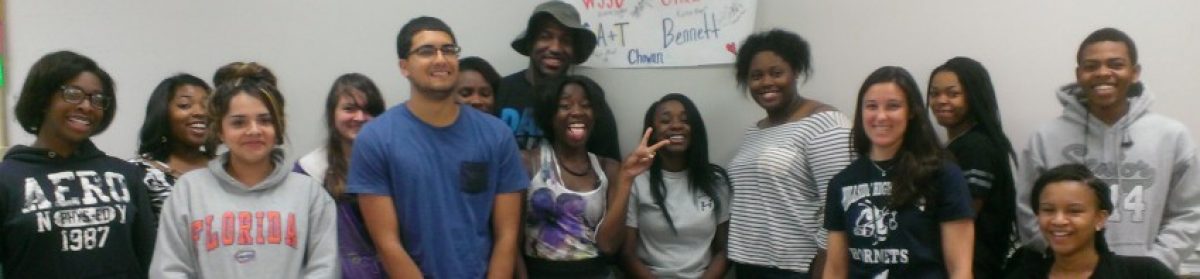
I think about my students a lot. They are the reason I get up in the morning, shower, and show up to work on time. They are the heart of almost every story I tell about how American culture is evolving rapidly. I am hopeful for the future when I talk to teenagers. I know that’s not necessarily a common opinion, but it among the professional circles in which I run.
There’s a reason I run in those circles. But some days, it still feels like we’re all just running in circles.
Progress is a long-term prospect. Sometimes teaching feels like a long con. If I can just convince enough of these young people to believe in the elusive concept of human decency, maybe the world will be a better place when they’re in charge. I say “con” because some days I’m not convinced that the concept “basic human decency” exists. Some days I think the opposite exists. I think of that scene in the Matrix where Agent Smith tells Neo that humanity is a virus that will inevitably destroy its planetary host, and I nod my head.
Some days I think all I have to do as a teacher is just get out of the way. Shine enough light into the darkness that kids can see their own brilliance. Or maybe tell enough truth about the world that students can see the darkness, and that’s when they discover their own inner light.
I like light metaphors. Light and dark. Much better than good and evil. So many people who do evil are true believers who genuinely believe that they are doing good for the world. Light, on the other hand, is by its nature mutable and elusive. It can only be seen in contrast to darkness. Darkness is rarely total. In the darkest night, you can see the most stars.
 Elizabeth DeOrnellas
Amazing, compelling writing! So honest, probing and well done. I will print it and read it many times. I am grateful for you in the world Liz!
LikeLike