A message about school shootings from a k-12 veteran

I just finished 13 years as a k-12 teacher. I am headed to Temple in August to enroll in a master’s in journalism program. My heart bleeds for every Philadelphia parent who has lost a loved one; every Philadelphia student who has lost a classmate; every Philadelphia teacher who has lost a student; and all those who have lost friends and loved ones to gun violence. Gun violence is a real and continuous trauma that all our students, teachers, and parents are struggling to confront.

It does not matter how you register to vote (I am registered nonpartisan). It matters that you register. It matters that you vote. It matters how you vote. It matters who you vote for. It matters how you act when the votes are being counted and how you act when the vote counts have been certified. Maintaining democracy is an active process — it requires participation from all those living in a country that is a functioning democracy who wish to continue to live in a country that remains a functioning democracy.

Sometimes when you can’t get the news cycle out of your head, it’s time to say something.

I just finished 13 years as a k-12 teacher. I am headed to Temple in August to enroll in a master’s in journalism program. My heart bleeds for every Philadelphia parent who has lost a loved one; every Philadelphia student who has lost a classmate; every Philadelphia teacher who has lost a student; and all those who have lost friends and loved ones to gun violence. I know what it feels like to be at a student funeral and to watch your students grieve for a classmate. There are too many youth funerals in America. School shootings aren’t the only gun violence problem we have in America. Gun violence is a real and continuous trauma that all our students, teachers, and parents are struggling to confront.

If you do want to learn more about how school shootings fit into the larger picture of gun violence in America, and you want to inform yourself about school shootings, please talk to teachers and students. We know. We KNOW. And if you want to share, please don’t share conspiracy theories. Be a good human. Fact check. Cite credible sources. You know who has an informed opinion on whether or not teachers should be armed? Teachers. #neveragain #enoughisenough #uvalde #parkland #sandyhook

Continue reading “A message about school shootings from a k-12 veteran”

The only thing “normal” about the “new normal” is it isn’t new

I’m a high school teacher. I keep thinking: “God, I can’t imagine what it must feel like to grow up through this.” The insanity and cravenness of our politics. The drumbeat of daily disaster. The unraveling of social ties. 

Tonight I realized: Someone thought that about me. 

They must have. 

I’m the 9-11 generation. 

That was my first week of high school. 

The mother of one of my volleyball teammates knew one of the flight attendants who died. I remember thinking how unreal it must feel to be personally connected to a disaster like that.

To know one of the bodies.  

That disaster seemed too big, too profound, too far beyond every rule of civil society we thought existed. 

Continue reading “The only thing “normal” about the “new normal” is it isn’t new”

What it feels like to be a teacher in the era of school shootings

When I was 22 and a first-year teacher, a Creative Writing student told me in the middle of a lockdown that it was my job to stand in front of the door so I would get shot first.

Then one of my students decided to hide in a cabinet so he could bang on its door.

I was proud of myself for not visibly jumping.

I had absolutely nothing productive to say.

That day, I had a 45-minute class that was on lockdown for at least two hours. We received no information from our administration other than confirmation that it was not a drill.

We watched Freedom Writers – not because it was meaningful or useful, but because Creative Writing was my third prep and it is nearly impossible as a first-year teacher to write curriculum for three different classes and be as over-prepared as you need to be to make sure you have enough material to fill each period, let alone deal with unforeseen contingencies.

Let’s be clear: School shootings (and the accompanying lockdown drills) are no longer unforeseen contingencies. This is my ninth year as a classroom teacher. When I heard about the Stoneman shooting, I barely blinked.

Why am I so desensitized? Here is a by-no-means-comprehensive list of the school shooting related incidents that have happened to me during the past nine years:

Continue reading “What it feels like to be a teacher in the era of school shootings”

30 Things I Learned by 30

In lieu of New Year’s Resolutions, I offer this piece I wrote in honor of my birthday last spring:

30 Things I Learned by 30

  1. If you tell Creative Writing students they can write about nonhuman characters, one of them will write a tragedy about the doomed love between a pencil and an eraser, and it will be worlds sadder than anything Shakespeare ever dreamed of. 

2. When you go to write down what you’ve learned, you will always gravitate toward what your students taught you.

3. For someone obsessed with other people’s stories, you will grow to find your own family history more and more fascinating.

4. You will always be more comfortable on one side of an interview than the other.

Continue reading “30 Things I Learned by 30”

One Year In

We have allowed our country to descend into tribalism, and that us vs. them attitude is infecting the way our young people view the world. The toxic bigotry of online life, in which anonymous hatred has become a reflex muscle, is seeping into our offline world. Meanwhile, our 70-year-old boy king tweets in the manor while the empire burns. He is the emperor of the trolls. He sees high ratings in the flames.

There are two Onion headlines that define for me the transition from Obama’s America to Trump’s.

On Nov. 4, 2008, the Onion’s main story was “Black Man Given Nation’s Worst Job.” I remember reading it and thinking, “That’s the most accurate description of presidential politics I’ve seen in a long time.” There was a knowingness to it – the cynicism that comes from watching a young go-getter go get something and then thinking, “Let’s see what happens when he actually tries to change something.”

Eight years later, the Onion ran this headline: “Study: Depression Up Among Teenage Girls Able to Perceive Any Part of the World Around Them.” It was after the election, and it said nothing about Hillary, but it perfectly captured the world weariness that comes from watching an absurdly well-qualified woman lose to an absurdly ill-qualified clown and having the conversation revolve, inevitably, around her “likeability” rather than his proudly ignorant bully of a persona.

Next weekend marks the one-year anniversary of Trump’s inauguration, and the most shocking thing about looking back on those two headlines is how thoroughly Trump has managed to redefine the job he so obviously never wanted. With Obama, there was an understanding that the presidency is a job – a difficult one, one that requires patience, hard work, diplomacy, and knowledge of both domestic and international policy.  With Trump, there is no understanding. Trevor Noah said watching the Trump presidency is akin to having a nationwide civics lesson in real-time. We’re all learning. The question is which lessons are sinking in.

Continue reading “One Year In”

By Faith Alone

By faith alone

Today


26 people died in a church


A young reporter stood in front of crime scene tape and said,


We don’t yet know


We know


We know Vegas


and Charleston


Aurora


and Sandy Hook


We know


Bump stocks


and neo-Nazis


Assault rifles


and the mentally ill


We know


At work my boss asked each of us


to pick a song that represented friendship


And my colleague picked a hymn


It’s a song I know


Today


all I want is for someone to come join me


in the silence


Tomorrow


the newspapers will publish photos


the pundits will proffer solutions


the politicians will pray


Tomorrow


and tomorrow


and tomorrow

What’s Hidden from Hidden Figures

As we get set for the Oscars tomorrow, remember this: Movies are big, shiny things. Everyday reality is small and messy. No one gets a big, shiny victory without fighting the small, messy, everyday battles.

I can’t say I in any way watched a full slate of Oscar films this year; I almost never do. I am excited to go see I Am Not Your Negro tomorrow. Anything I’ve ever read by James Baldwin has struck me as incredibly poetic and profound, and I know I haven’t seen enough film of him to understand what he was like in his own voice, so I look forward to starting to rectify that.

I have already made time for La La Land (I have a soft spot for both musicals and romantic comedies, and I was pleasantly surprised to see this one deviate a bit from the normal boy-meets-girl tropes); Moonlight (A friend one described Rachel McKibbens’ poem “The Widower” as an emotional bitch slap; there’s a reason I use that poem to teach figurative language. If I taught film study, I would teach this film for the same reason; it’s that powerful); and Hidden Figures. 

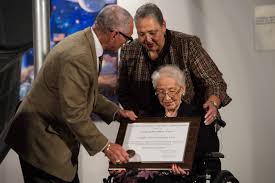
I suppose I could have started with that. I could have started with “I just came home from watching Hidden Figures…” but that opening doesn’t make sense to me for several reasons. One, I didn’t read exhaustively about the film before I went to see it because I wanted to experience it as a movie before I decided to pick it apart, but I did do enough pre-reading to know that “based on true events” is, as always, an admission that liberties have been taken with the narrative. The resulting omissions and edits left me feeling decidedly bittersweet about this particular success story.

Continue reading “What’s Hidden from Hidden Figures”

Transitions

Consider the following an attempt to break out of my own filter bubble and to honestly consider how a young woman, newly made very powerful, feels about her father.

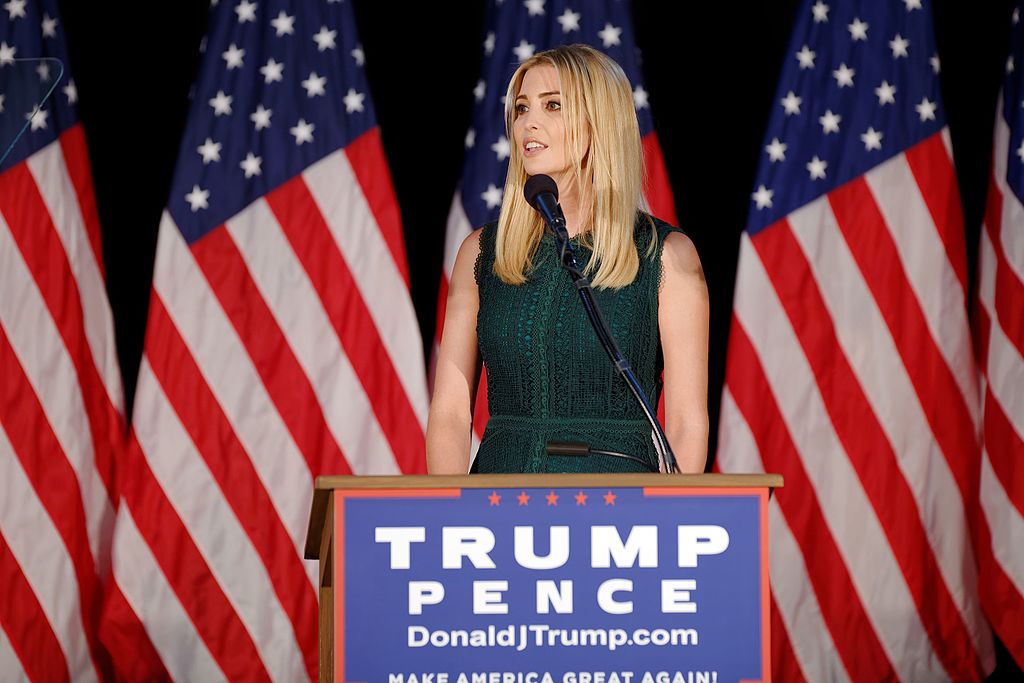
The poem below is an experiment in persona poetry. I love reading persona poetry (and using it to teach students about point of view), but sometimes I find writing persona poetry to be problematic. I think that’s because I’ve put so much time into reminding myself that we all have our own filters and therefore it’s nearly impossible to truly know another’s mind; writing in someone else’s voice can feel presumptuous. However, it is an excellent way to build empathy. Consider the following an attempt to break out of my own filter bubble and to honestly consider how a young woman, newly made very powerful, feels about her father.  *Photo Credit on featured image: Michael Vadon


Ivanka Trump, on my father


My father trusts me


He trusts me with the family business

     just as much as he trusts my brothers


He trusts me to be in the room


He trusts me to meet with foreign leaders


He trusts that I will be successful

     that I will give him good advice


He trusts that I will be respectful

     Respectful of my father

     Respectful of my husband

     Respectful of my chosen religion, in all its beauty

Continue reading “Transitions”

What Community Means to Me

The internet and social media allow me to be part of a nationwide (and global) community of educators. That is my community. Those are my people. Students are teachers too. I learn more from my students than I learn from anyone else. Listen first. Then speak out. My definition of community includes honesty. Speak your truth.

My current charter school organization started an initiative last year in which we talked a lot about building “tribal community” on our campuses. Thankfully, we have stopped using the term “tribal” – I don’t feel the need to tell you who was upset and why; I trust you to figure that out.

That shade aside, the concepts behind building community in our classrooms and on our campuses truly are key to effective teaching. Students can’t learn if they don’t feel safe. There is extensive neuroscience that backs that philosophy, and it is a philosophy that educators across the United States recognize to be both research-driven and ethically important.

It is naive to pretend that this is a philosophy that only matters to students. Teachers have to feel safe in the classroom too. Respect is a two-way street. It is the teacher’s job, as the adult in the room, to set a “warm but strict” tone that both acknowledges students’ innate humanity and holds them to high expectations regarding behavior (in both the academic and social realms).

Back to the neuroscience realm: Teachers must acknowledge that students are operating with brains that are still developing; therefore, it is immensely important to be as patient as possible when dealing with students who have in any way violated the agreed-upon community norms. It’s also important to let students have a say in establishing those norms. Norms that Summit Public Schools regularly uses that I love: One Voice (listen attentively to whomever is speaking, whether that be the teacher or a classmate); Stand Up for Your Education (advocate for yourself; seek help from adults or peers when necessary to reach academic success; value your development as a lifelong learner); and This is Our School. (That one is the one that is most likely to be interpreted in a sarcastic manner by students who don’t necessarily respect the physical space of a classroom, the equipment they are given, or the physical space of the school outside a classroom; however, it is also the norm that reminds students to respect said physical spaces and to value their school community as both a community of people and a physical space for learning. Sometimes my students pronounce the acronym TIOS “tee-awhs,” and my gringa brain thinks, “Why are they pronouncing ‘uncles’ so strangely?” Then I have to remind myself that’s not what the student meant.)

Continue reading “What Community Means to Me”

Out of the mouths of children: What our students have to teach us

We live in a both/and world that is often treated as an either/or. I think it’s important to acknowledge, in today’s political climate of both fear and defiance, that both sides often have a point.

In the spring of 2015, I taught eighth grade Social Studies in Hayward for the final three months of the school year. We ended the year with a DBQ-based project (Document-Based Question – that’s just education jargon for providing students with excerpts from primary and secondary sources and instructing them to make an argument based on those sources) featuring the words of Dr. Martin Luther King Jr. and Malcolm X. The guiding question was, “What is the most effective way to protest systemic racism?” The majority of my students made (at times incredibly eloquent) arguments for nonviolence. Others made equally eloquent arguments for separatism. I believe some of my students were enamored of the idea that a teacher would allow them to write an essay that argued for the effectiveness of violence. However, most of the students who chose that argument did not fall into that camp. Most of the students who chose that argument thoughtfully considered the source material in front of them (Dr. King and Malcolm X’s words, along with current event articles on the protests in Ferguson and Baltimore and case studies in community policing) and decided that the traditional (or perhaps sanitized is the best word – it’s clear from Donald Trumps treatment of Rep. John Lewis that not everyone understands the extraordinary violence nonviolent protesters often face) modes of nonviolent protest were perhaps not enough. These students did not tend to advocate open violence; they were attracted to Malcolm X’s ideas on separatism. Below, I have provided a selection of conclusion paragraphs from the students’ completed essays. We live in a both/and world that is often treated as an either/or. I think it’s important to acknowledge, in today’s political climate of both fear and defiance, that both sides often have a point. The students who wrote the research papers which are excerpted below are tenth graders now; that means they will be eligible to vote in 2020. If demographics matter to you, two of these students identify as Asian American, one identifies as African American, one identifies as White American, and one identifies as Latina. 

“It’s pretty clear from words from some of the best advocates for Civil Rights and proof from society that separatism is the strongest weapon towards the racial injustice that is still around today. If MLK and Malcolm X chooses separatism over violence, that has to mean that separatism has something violence doesn’t; and it does. Separatism in a nutshell is not physically fighting back but standing against the unfair and oppressors by refusing to follow the laws of unjust and taking what is there and shape it into something truly beneficial. It’s time to change the twisted system that was built in the 1900s. It’s important that we look back into the history and roots of the problems because all the pain and unjust is what shaped today’s society. It makes up what people are a part of, and it can give direction for people to create a better future. King once said in his infamous ‘I Have A Dream’ speech, ‘With this faith we will be able to work together, to pray together, to struggle together, to go to jail together, to climb up for freedom together, knowing that we will be free one day.’ It’s important to remember moving forward: One person or a group of people cannot control the actions of another person or group of people, but they can improve themselves as group, a collective together to create something that will stop the unjustified actions of the other person or group and create a better tomorrow- the tomorrow that King dreamt and fought so incredibly hard for.” -Emily, an eighth grader in Hayward, CA
“Today systemic racism still happens to target African Americans as it did back then. In a New York Times article from 2014, it said, ‘But the system, even when it’s run by a black mayor and a black commissioner, even when a majority of the city council is black, protects the police. no matter how blatant and brutal they are.’ So even today, we are still going through these problems and it’s mostly happening through violence brought upon blacks. So still to solve this problem, separatism is the best way to avoid systemic racism.” -Imani, an eighth grader in Hayward, CA
“Nonviolence may not always seem practical to use against aggressors, but non-violence is ever effective in solving things like systemic racism since it causes fewer troubles for the minority. En masse, nonviolent solutions people should be taking to solve systemic racism and other huge problems, nonviolent approaches prove to be effective in solving many racism-based problems, including systemic racism, violence does not [sic] anything and it’s not the only other option or resort in ending systemic racism, or any problem really. This research topic is important because it’s vital to recognize what solutions to problems have the least amount of consequences and risks, otherwise, people will have to deal with this fallout. As a whole, would the people of this nation want to see one of established peace, or one ridden in war?” -Sophia, an eighth grader in Hayward, CA
“Nonviolence is the best tactic because it can help people work together. In a speech by Martin Luther King jr he says, “with this faith we will be able to work together, to pray together, to struggle together, to go to jail together, to climb up for freedom together.” This is saying that this peacefulness will not be met unless we stay calm and nice with what we are trying to do. And that way is with nonviolence. In Martin Luther King’s speech, “Nonviolence: The only Road to Freedom” he says, “ … there is nothing quite so effective as a refusal to cooperate economically … evil in our communities.” This shows that the evil is violence and nothing is as great as the refusal to cooperate economically and this will help the most out of every other thing people are trying to do.” -Jeremy, an eighth grader in Hayward, CA
“Fixing the system can only be achieved through nonviolence. Violence only has downfalls and disrupts the connection between citizens, creating, not resolution, but a dystopia. Nonviolence is one of the best strategies as it can generate a tremendous amount of power and deliver a deep blow on the opposition, With only a harmless, yet effective, method can equality actually be restored. With violence, community relations are destroyed and a sense of dominance will always remain on one side or the other. A plan of nonviolence is stirring among more and more people nowadays. Not only can it keep the peaceful relations of citizens, but nonviolence is becoming popular and successful. So, is it really important? Should people care about it? Yes. are you not a human trying to live well in this world? Everybody has a voice and with nonviolence, your voice can be heard. Maybe systemic racism doesn’t affect you at all; it it does for millions of others in this world and the people who are peacefully protesting now, are guaranteeing that you and billions of others do not meet the same fate. The more people, the louder nonviolence gets and has to be listened to. So why wouldn’t you join?” -Jason, an eighth grader in Hayward, CA