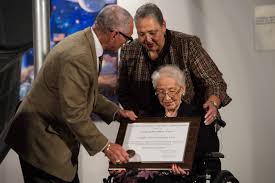
What’s Hidden from Hidden Figures

As we get set for the Oscars tomorrow, remember this: Movies are big, shiny things. Everyday reality is small and messy. No one gets a big, shiny victory without fighting the small, messy, everyday battles.

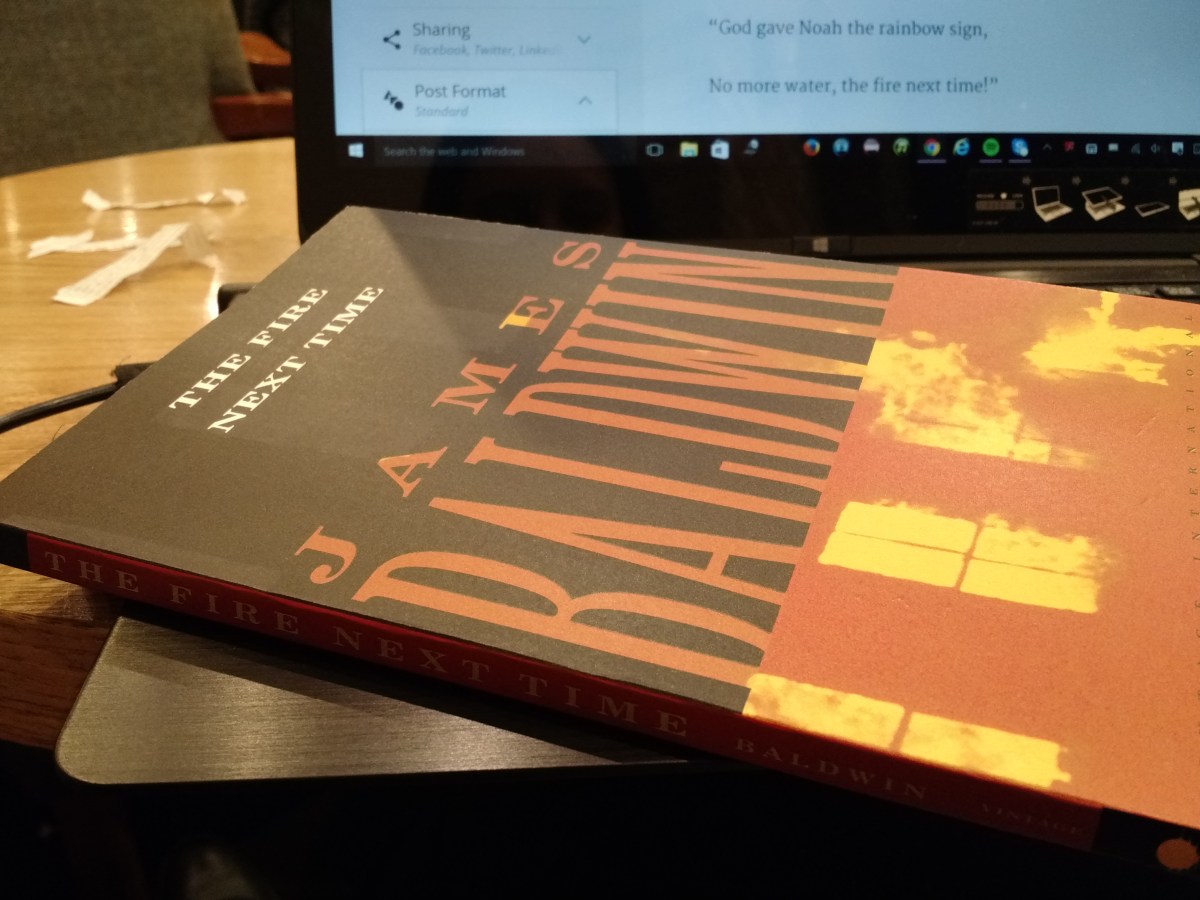
I can’t say I in any way watched a full slate of Oscar films this year; I almost never do. I am excited to go see I Am Not Your Negro tomorrow. Anything I’ve ever read by James Baldwin has struck me as incredibly poetic and profound, and I know I haven’t seen enough film of him to understand what he was like in his own voice, so I look forward to starting to rectify that.

I have already made time for La La Land (I have a soft spot for both musicals and romantic comedies, and I was pleasantly surprised to see this one deviate a bit from the normal boy-meets-girl tropes); Moonlight (A friend one described Rachel McKibbens’ poem “The Widower” as an emotional bitch slap; there’s a reason I use that poem to teach figurative language. If I taught film study, I would teach this film for the same reason; it’s that powerful); and Hidden Figures. 

I suppose I could have started with that. I could have started with “I just came home from watching Hidden Figures…” but that opening doesn’t make sense to me for several reasons. One, I didn’t read exhaustively about the film before I went to see it because I wanted to experience it as a movie before I decided to pick it apart, but I did do enough pre-reading to know that “based on true events” is, as always, an admission that liberties have been taken with the narrative. The resulting omissions and edits left me feeling decidedly bittersweet about this particular success story.
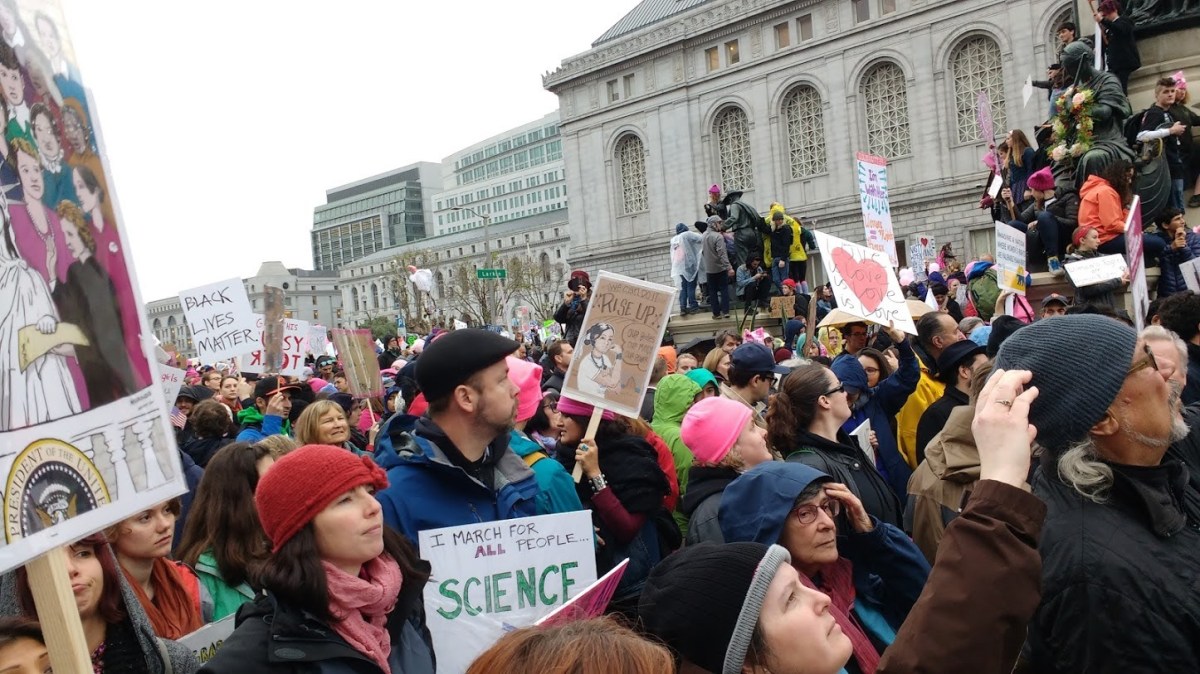

Continue reading “What’s Hidden from Hidden Figures”

What Community Means to Me

The internet and social media allow me to be part of a nationwide (and global) community of educators. That is my community. Those are my people. Students are teachers too. I learn more from my students than I learn from anyone else. Listen first. Then speak out. My definition of community includes honesty. Speak your truth.

My current charter school organization started an initiative last year in which we talked a lot about building “tribal community” on our campuses. Thankfully, we have stopped using the term “tribal” – I don’t feel the need to tell you who was upset and why; I trust you to figure that out.

That shade aside, the concepts behind building community in our classrooms and on our campuses truly are key to effective teaching. Students can’t learn if they don’t feel safe. There is extensive neuroscience that backs that philosophy, and it is a philosophy that educators across the United States recognize to be both research-driven and ethically important.

It is naive to pretend that this is a philosophy that only matters to students. Teachers have to feel safe in the classroom too. Respect is a two-way street. It is the teacher’s job, as the adult in the room, to set a “warm but strict” tone that both acknowledges students’ innate humanity and holds them to high expectations regarding behavior (in both the academic and social realms).

Back to the neuroscience realm: Teachers must acknowledge that students are operating with brains that are still developing; therefore, it is immensely important to be as patient as possible when dealing with students who have in any way violated the agreed-upon community norms. It’s also important to let students have a say in establishing those norms. Norms that Summit Public Schools regularly uses that I love: One Voice (listen attentively to whomever is speaking, whether that be the teacher or a classmate); Stand Up for Your Education (advocate for yourself; seek help from adults or peers when necessary to reach academic success; value your development as a lifelong learner); and This is Our School. (That one is the one that is most likely to be interpreted in a sarcastic manner by students who don’t necessarily respect the physical space of a classroom, the equipment they are given, or the physical space of the school outside a classroom; however, it is also the norm that reminds students to respect said physical spaces and to value their school community as both a community of people and a physical space for learning. Sometimes my students pronounce the acronym TIOS “tee-awhs,” and my gringa brain thinks, “Why are they pronouncing ‘uncles’ so strangely?” Then I have to remind myself that’s not what the student meant.)

Continue reading “What Community Means to Me”

War Reporting

Written for Rattle’s Poets Respond series

Rattle’s Poets Respond is an attempt to return poetry to its storytelling roots by providing a space for poets to respond to current events in near real time. I submitted this piece in response to the reports of Aleppo’s fall. This poem owes a huge debt to the reporters who inspired it, in particular this report Bilal Abdul Kareem filed for Al Jazeera.

Click here to read the poem.

Politics in the Classroom

The first presidential election that I remember is Bush vs. Gore, and to this day I’m impressed that we got all the way through that year of civics without anyone being able to discover what party our eighth grade teacher supported.

Looking back on it, I think it’s quite possible that she truly was a moderate, and that made it easy for her to stay neutral. I remember how horrified she was by how polarized our class was and how much energy she put into making us think about the election issue by issue instead of relying on the party line.

In 2012, I pulled off the same trick. I had half my journalism class convinced I was voting for Romney simply because I made them analyze both candidate’s platforms.

This year, I found it impossible to stick to that line. I told all my students that I wanted them to feel free to express whatever political opinion they held. I encouraged them to play devil’s advocate. I also told them I simply couldn’t stay neutral – not in the face of a candidate who was willing to throw away all the rules.

Continue reading “Politics in the Classroom”

No, I’m not surprised. I am angry.

I have been trying all day not to write a rant.


I tried to channel my inner “Whoa. OK” Hillary shoulder shimmy. That just made me angry that Hillary has to make her well-earned exasperation cute in order to appear “likeable.”


I listened to Hillary quote Michelle and thought, “When they go low, we go high.” That seems like valid life advice – after all, if there’s one person whose steely grace I’d like to epitomize, it’s Michelle.


Then I listened to the debate.


I listened to a journalist clearly define sexual assault and a presidential candidate dismiss it as “locker room talk.”


I thought about what “locker room talk” means to me. I grew up with Title IX. For me, a locker room is where I learned from female teammates how to be strong. Where I learned what being a captain means. Where I learned the line between celebration and consolation is perilously thin.


Locker rooms were a safe place for me. The talk that happened there felt empowering.


That’s not the kind of “locker room talk” Trump meant.

Continue reading “No, I’m not surprised. I am angry.”

Classroom Talk

Today I stood up in front of my classroom and said the police should not kill black people.

We’d just watched a video in which a man is called a “big, bad dude” for walking down the street with his hands in the air.

I told my class that I was raised to trust cops. That I expect cops to trust me. That I know that’s not everyone’s reality.

The reality is it’s been five years since I’ve been in Tulsa. It’s been five months since the last time the Tulsa police faced heat for killing an innocent man.

My San Jose kids don’t know anything about Tulsa. They think it’s in Texas. But they know something about the endless string of headlines and hashtags that have come to dominate our national conversation.

Except when they don’t. Not everyone talks about it. So today we talked about it.

Continue reading “Classroom Talk”

What Fight the Power Means When You’re the Adult in the Room


Have you ever wanted to break something?


I have a recurring fantasy about smashing wine glasses. It doesn’t have anything to do with potential metaphorical implications – they’re just small, and thin, and, if you’re going to do it, the point is shattering.


Not sure why that particular vision has stuck around my head so long, I just know that if I was to ever direct a scene in which metaphorical catharsis turned literal, that’s what the heroine would be doing.


Of course, here’s the problem with that – in said scene, you eventually end up with a crunchy carpet of broken glass, and, if the theoretical heroine is anything like me, she’d then feel obligated to sweep up.


That’s my main issue with rebellion. I’m all in favor of window smashing and flamethrowing – except I know how much work it takes to get to the point where you own a window, and I’ve seen how long it takes the scars to heal when someone gets burned.

Continue reading “What Fight the Power Means When You’re the Adult in the Room”

Why Satire and Journalism are Two Different Games

Why Satire and Journalism are Two Different Games

In pdf format, in case anyone feels like using this in a classroom (if you do, let me know! There’s a contact form at the bottom of this post). Speaking of comments, feel free to comment on the poll below, just please adhere to these three guidelines: No pornography, no trolling, no spam. Be your best self 🙂

Contact me!

Go back

Your message has been sent

Warning
Warning
Warning
Warning
Warning

Warning.