What We Talk About When We Talk About War

Some days I think all I have to do as a teacher is just get out of the way. Shine enough light into the darkness that kids can see their own brilliance. Or maybe tell enough truth about the world that students can see the darkness, and that’s when they discover their own inner light.

I’ve been struggling with this pervasive sense – on social media, in the mainstream media, in pop culture, in everyday discussions – that our country is at war with itself. Trump’s election win seems to be the culmination of a host of unsettling, depressing trends that have stoked fear, anger and anxiety. Those trends include (but are certainly not limited to):


-Hyperpolarization fueled by filtered news feeds and the rise of fake news


-Increasingly antagonistic partisan politics and the collapse of bipartisan political efforts (which fuels a collapse in our collective faith in the effectiveness of government institutions)


-Identity politics that sow divisiveness and reject unity / identity politics that raise issues Americans aren’t ready or willing to accept as reality and honestly discuss (the perception of that issue pretty much breaks down along party lines)

Continue reading “What We Talk About When We Talk About War”
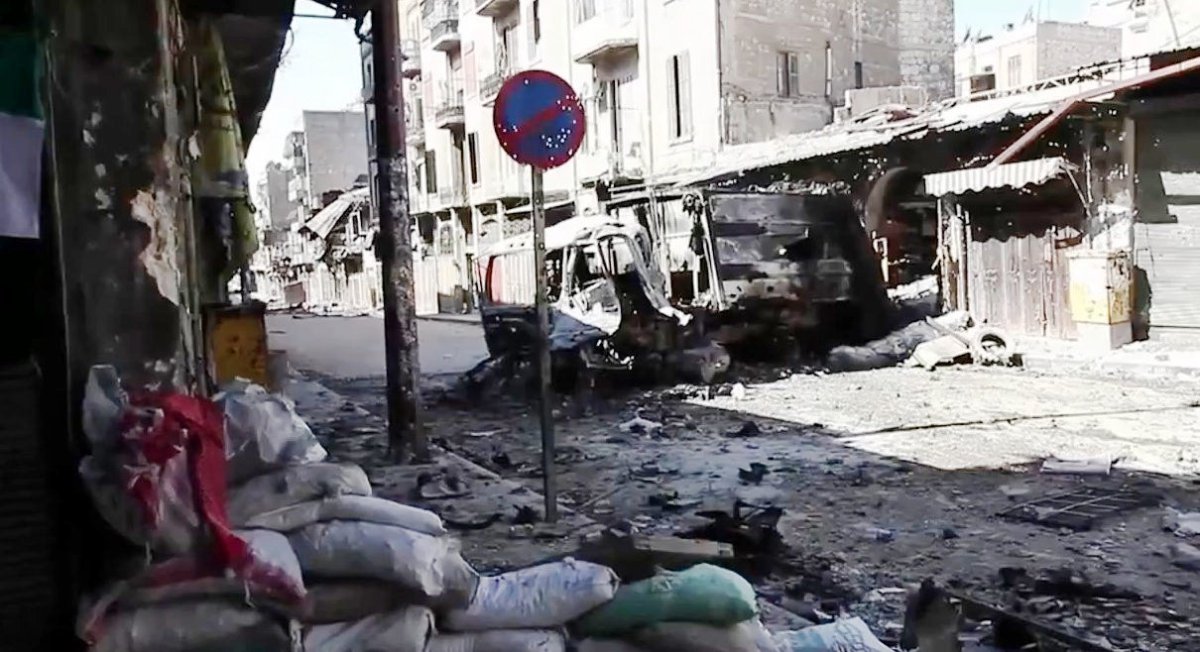
War Reporting

Written for Rattle’s Poets Respond series

Rattle’s Poets Respond is an attempt to return poetry to its storytelling roots by providing a space for poets to respond to current events in near real time. I submitted this piece in response to the reports of Aleppo’s fall. This poem owes a huge debt to the reporters who inspired it, in particular this report Bilal Abdul Kareem filed for Al Jazeera.

Click here to read the poem.

In Honor of My Favorite Nasty Woman

To the highest, hardest glass ceiling – and those who cracked it

The poem below is an experiment in persona poetry. I love reading persona poetry (and using it to teach students about point of view), but sometimes I find writing persona poetry to be problematic. I think that’s because I’ve put so much time into reminding myself that we all have our own filters and therefore it’s nearly impossible to truly know another’s mind; writing in someone else’s voice can feel presumptuous. However, it is an excellent way to build empathy. Consider the following a paean  crossed with an elegy (although I’m reluctant to use that latter word, knowing her work is far from over).


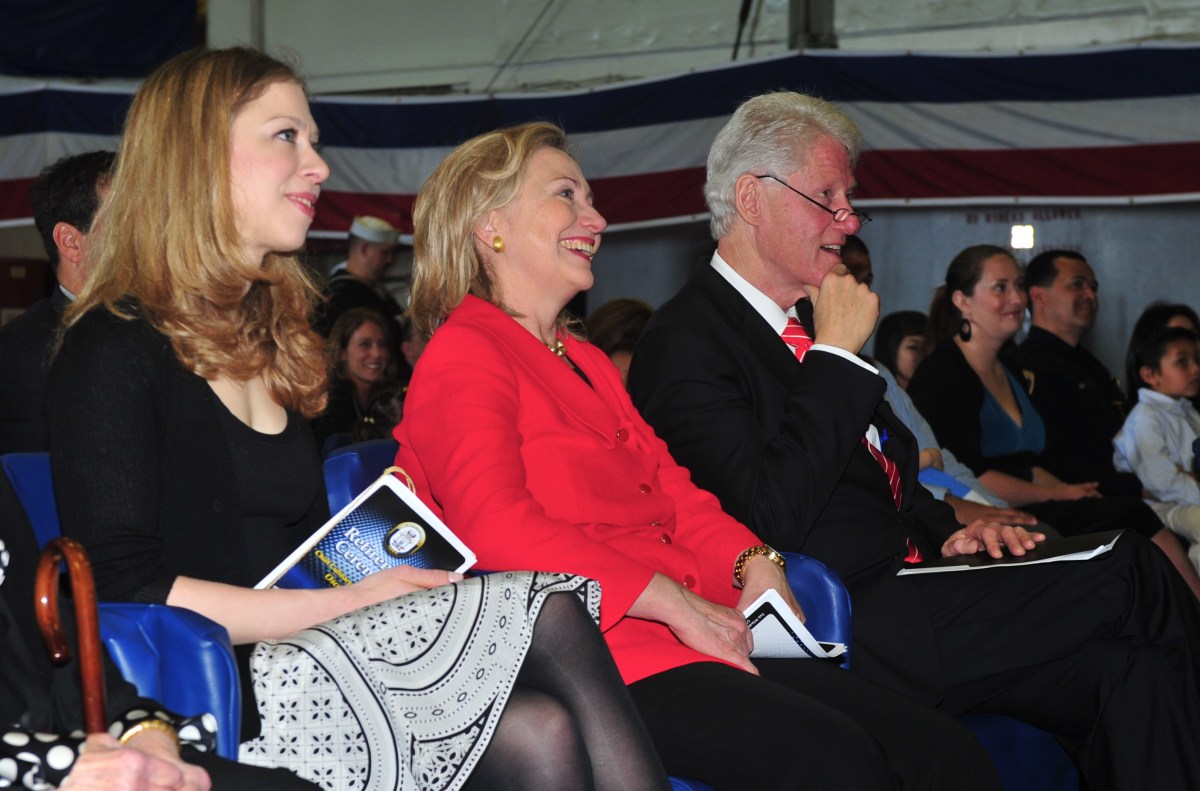
Chelsea Clinton, on my mother


Remember that

     She sheltered me

And so did my father

When I was a kid

And they wanted me to be free

To be a kid,

Regardless of the color of my house

Continue reading “In Honor of My Favorite Nasty Woman”

Politics in the Classroom

The first presidential election that I remember is Bush vs. Gore, and to this day I’m impressed that we got all the way through that year of civics without anyone being able to discover what party our eighth grade teacher supported.

Looking back on it, I think it’s quite possible that she truly was a moderate, and that made it easy for her to stay neutral. I remember how horrified she was by how polarized our class was and how much energy she put into making us think about the election issue by issue instead of relying on the party line.

In 2012, I pulled off the same trick. I had half my journalism class convinced I was voting for Romney simply because I made them analyze both candidate’s platforms.

This year, I found it impossible to stick to that line. I told all my students that I wanted them to feel free to express whatever political opinion they held. I encouraged them to play devil’s advocate. I also told them I simply couldn’t stay neutral – not in the face of a candidate who was willing to throw away all the rules.

Continue reading “Politics in the Classroom”

No, I’m not surprised. I am angry.

I have been trying all day not to write a rant.


I tried to channel my inner “Whoa. OK” Hillary shoulder shimmy. That just made me angry that Hillary has to make her well-earned exasperation cute in order to appear “likeable.”


I listened to Hillary quote Michelle and thought, “When they go low, we go high.” That seems like valid life advice – after all, if there’s one person whose steely grace I’d like to epitomize, it’s Michelle.


Then I listened to the debate.


I listened to a journalist clearly define sexual assault and a presidential candidate dismiss it as “locker room talk.”


I thought about what “locker room talk” means to me. I grew up with Title IX. For me, a locker room is where I learned from female teammates how to be strong. Where I learned what being a captain means. Where I learned the line between celebration and consolation is perilously thin.


Locker rooms were a safe place for me. The talk that happened there felt empowering.


That’s not the kind of “locker room talk” Trump meant.

Continue reading “No, I’m not surprised. I am angry.”

Classroom Talk

Today I stood up in front of my classroom and said the police should not kill black people.

We’d just watched a video in which a man is called a “big, bad dude” for walking down the street with his hands in the air.

I told my class that I was raised to trust cops. That I expect cops to trust me. That I know that’s not everyone’s reality.

The reality is it’s been five years since I’ve been in Tulsa. It’s been five months since the last time the Tulsa police faced heat for killing an innocent man.

My San Jose kids don’t know anything about Tulsa. They think it’s in Texas. But they know something about the endless string of headlines and hashtags that have come to dominate our national conversation.

Except when they don’t. Not everyone talks about it. So today we talked about it.

Continue reading “Classroom Talk”

Orlando

Only when I’m dancing do I feel this free …


This one’s for the girls

Fierce

Fabulous

And forgotten


By those who think it takes royal blood to be a Queen

Those who don’t understand that true Pride is earned

Through jeers and judgment


This is for those whose love is a battlefield

And those who were there

When the beats turned to bullets


This is for those who are always on point

Those who slay


We want to remember you that way

Free

From the hatred and the fear

Still dancing


A People’s History

Finally finished reading Howard Zinn’s A People’s History of the United States – I guess April’s not bad for a New Year’s Resolution. Read it if you haven’t; reread it if you have; it’s the kind of book that changes your perspective. Out of everything Zinn has to say, here’s the part that will stick with me:

But with all the controls of power and punishment, enticements and concessions, diversions and decoys, operating throughout the history of the country, the Establishment has been unable to keep itself secure from revolt. Every time it looked as if it had succeeded, the very people it thought seduced or subdued, stirred and rose. Blacks, cajoled by Supreme Court decisions and congressional statutes, rebelled. Women, wooed and ignored, romanticized and mistreated, rebelled. Indians, thought dead, reappeared, defiant. Young people, despite lures of career and comfort, defected. Working people, thought soothed by reforms, regulated by law, kept within bounds by their own unions, went on strike. Government intellectuals, pledged to secrecy, began giving away secrets. Priests turned from piety to protest.

To recall this is to remind people of what the Establishment would like them to forget – the enormous capacity of apparently helpless people to resist, of apparently contented people to demand change. To uncover such history is to find a powerful human impulse to assert one’s humanity. It is to hold out, even in times of deep pessimism, the possibility of surprise. (634)


The State of Our Union

There’s something about this current election cycle that feels disjointed. We’re entering the part where the horse race becomes real, but it still feels as if the parties are running on two completely separate tracks.


I’m obviously not the only one meditating on how the country got so divided. In the middle of our nation’s most stage-managed political event, our President sounded a note that rang with an almost wistful honesty:


“A better politics doesn’t mean we have to agree on everything. This is a big country — different regions, different attitudes, different interests. That’s one of our strengths, too. Our Founders distributed power between states and branches of government, and expected us to argue, just as they did, fiercely, over the size and shape of government, over commerce and foreign relations, over the meaning of liberty and the imperatives of security.


But democracy does require basic bonds of trust between its citizens. It doesn’t work if we think the people who disagree with us are all motivated by malice. It doesn’t work if we think that our political opponents are unpatriotic or trying to weaken America. Democracy grinds to a halt without a willingness to compromise, or when even basic facts are contested, or when we listen only to those who agree with us. Our public life withers when only the most extreme voices get all the attention. And most of all, democracy breaks down when the average person feels their voice doesn’t matter; that the system is rigged in favor of the rich or the powerful or some special interest.

Continue reading “The State of Our Union”

What we talk about

I’ve been trying to figure out if I have anything worth saying about Tamir Rice.

He was 12.

I keep coming back to that.

There is a conversation to be had about how the failure of gun control and the insidious impact of systemic racism combine to create a law enforcement culture based on fear.

There’s also a conversation to be had about how we protect our kids. All kids. Especially those whose innocence is stolen by a world that still, too often, sees skin color first and humanity second.

To all those thoughtfully engaged in that dialogue, I thank you. Tonight, this is all I have to add:

Our country is hurting. Every time a child dies, the cut bites deeper. 

At this point, the only people I blame are the ones who can’t see the blood.

Continue reading “What we talk about”