One Year In

We have allowed our country to descend into tribalism, and that us vs. them attitude is infecting the way our young people view the world. The toxic bigotry of online life, in which anonymous hatred has become a reflex muscle, is seeping into our offline world. Meanwhile, our 70-year-old boy king tweets in the manor while the empire burns. He is the emperor of the trolls. He sees high ratings in the flames.

There are two Onion headlines that define for me the transition from Obama’s America to Trump’s.

On Nov. 4, 2008, the Onion’s main story was “Black Man Given Nation’s Worst Job.” I remember reading it and thinking, “That’s the most accurate description of presidential politics I’ve seen in a long time.” There was a knowingness to it – the cynicism that comes from watching a young go-getter go get something and then thinking, “Let’s see what happens when he actually tries to change something.”

Eight years later, the Onion ran this headline: “Study: Depression Up Among Teenage Girls Able to Perceive Any Part of the World Around Them.” It was after the election, and it said nothing about Hillary, but it perfectly captured the world weariness that comes from watching an absurdly well-qualified woman lose to an absurdly ill-qualified clown and having the conversation revolve, inevitably, around her “likeability” rather than his proudly ignorant bully of a persona.

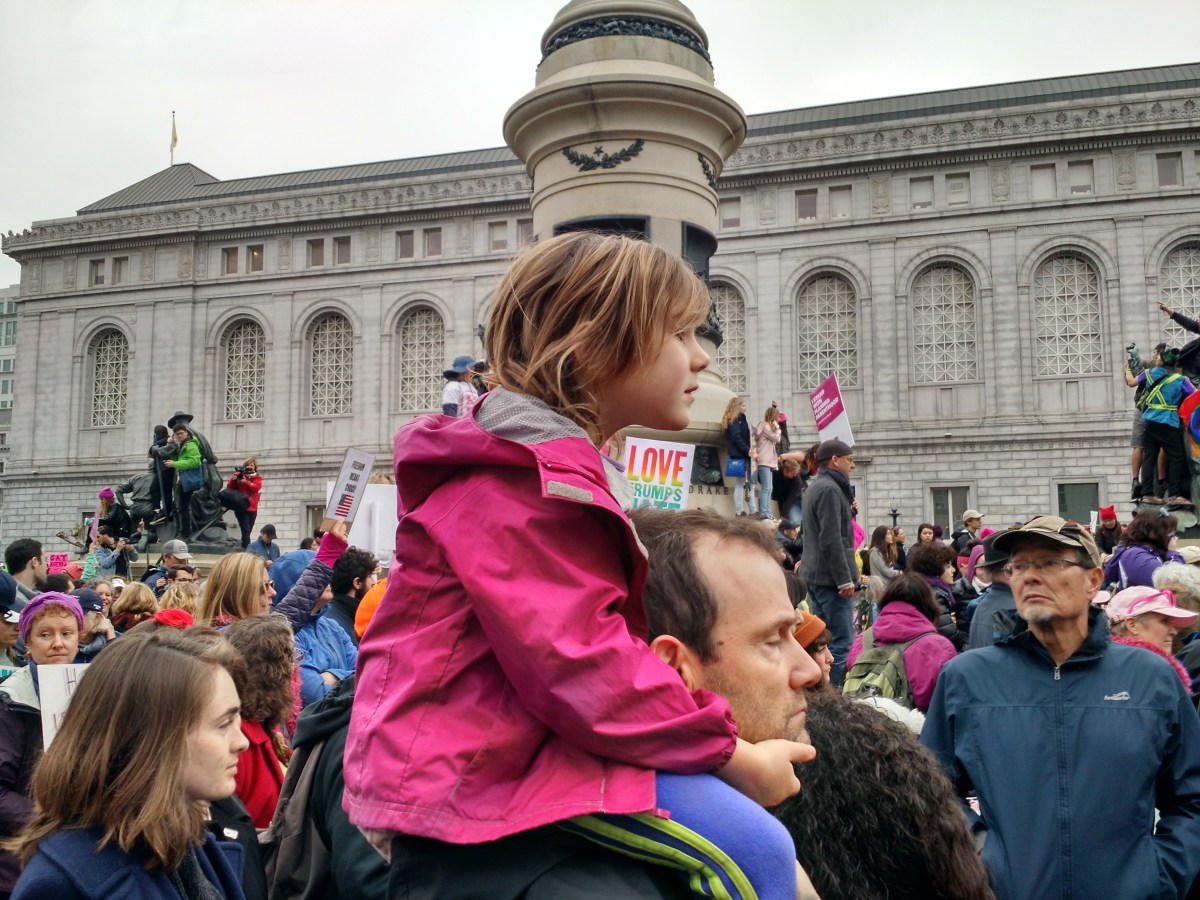
Next weekend marks the one-year anniversary of Trump’s inauguration, and the most shocking thing about looking back on those two headlines is how thoroughly Trump has managed to redefine the job he so obviously never wanted. With Obama, there was an understanding that the presidency is a job – a difficult one, one that requires patience, hard work, diplomacy, and knowledge of both domestic and international policy.  With Trump, there is no understanding. Trevor Noah said watching the Trump presidency is akin to having a nationwide civics lesson in real-time. We’re all learning. The question is which lessons are sinking in.
Continue reading “One Year In”

Transitions

Consider the following an attempt to break out of my own filter bubble and to honestly consider how a young woman, newly made very powerful, feels about her father.

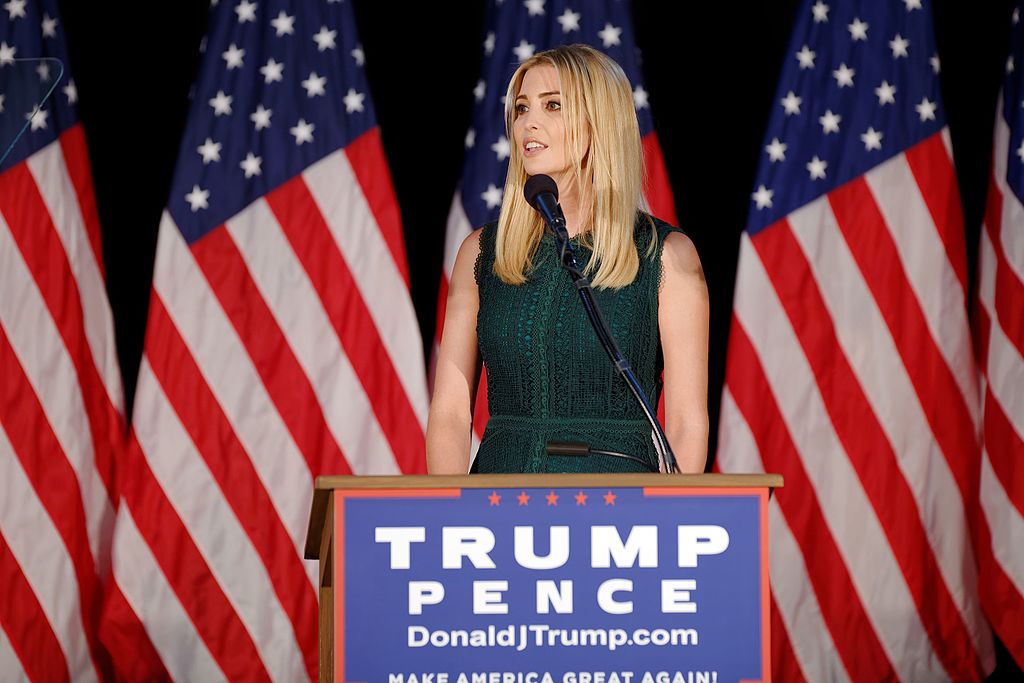
The poem below is an experiment in persona poetry. I love reading persona poetry (and using it to teach students about point of view), but sometimes I find writing persona poetry to be problematic. I think that’s because I’ve put so much time into reminding myself that we all have our own filters and therefore it’s nearly impossible to truly know another’s mind; writing in someone else’s voice can feel presumptuous. However, it is an excellent way to build empathy. Consider the following an attempt to break out of my own filter bubble and to honestly consider how a young woman, newly made very powerful, feels about her father.  *Photo Credit on featured image: Michael Vadon


Ivanka Trump, on my father


My father trusts me


He trusts me with the family business

     just as much as he trusts my brothers


He trusts me to be in the room


He trusts me to meet with foreign leaders


He trusts that I will be successful

     that I will give him good advice


He trusts that I will be respectful

     Respectful of my father

     Respectful of my husband

     Respectful of my chosen religion, in all its beauty

Continue reading “Transitions”

The election I lost

I have tried and tried to figure out what it must feel like to be Hillary Clinton, waiting for the dawn of this Inauguration Day. I will never fully be able to understand what it feels like to come that close to our highest, hardest glass ceiling and be viscerally reminded that our nation is not ready. I am trying to remind myself that our kids are ready. They do not understand why their leaders do not see that the world has already changed.

On the eve of Inauguration Day 2017, I want to tell the story of the election I lost.


This is not a story I tell very often.


It is long, and it is complicated, and it is fiercely personal in the way that only a campaign can be. An election campaign turns a candidate from a private figure into a public figure. For a first timer, the loss of privacy is jarring. For a first timer who had always chosen to remain on the press side of the press / government divide, the idea that my name, photo, and platform were to appear on the newspaper’s front page seemed like an absurdity.


I had always conceptualized the press as a behind-the-scenes role. One of my best friends, a fellow Tar Heel who I met in a seminar course on chaos theory our freshman year, had taken the opposite track. She served on Honor Court for years and then ran for Student Body President as an outsider, staffing her campaign with fellow intellectuals, most of whom had more or less avoided the Student Government scene while at Carolina, preferring to spend their time working for student-run nonprofits or think tanks rather than serving in Student Congress or the Executive Branch. She had to attend endless campaign forums, hosted by any student group with enough clout to demand an appearance from presidential candidates. I had to do one press conference (for the aforementioned front page printing of my platform). I remember it as one of the most awkward experiences of my life.


The Daily Tar Heel limited its Editor-in-Chief candidates to an 800-word platform. I remember this word limit because I stuck to it. My opponent did not.

Continue reading “The election I lost”

What We Talk About When We Talk About War

Some days I think all I have to do as a teacher is just get out of the way. Shine enough light into the darkness that kids can see their own brilliance. Or maybe tell enough truth about the world that students can see the darkness, and that’s when they discover their own inner light.

I’ve been struggling with this pervasive sense – on social media, in the mainstream media, in pop culture, in everyday discussions – that our country is at war with itself. Trump’s election win seems to be the culmination of a host of unsettling, depressing trends that have stoked fear, anger and anxiety. Those trends include (but are certainly not limited to):


-Hyperpolarization fueled by filtered news feeds and the rise of fake news


-Increasingly antagonistic partisan politics and the collapse of bipartisan political efforts (which fuels a collapse in our collective faith in the effectiveness of government institutions)


-Identity politics that sow divisiveness and reject unity / identity politics that raise issues Americans aren’t ready or willing to accept as reality and honestly discuss (the perception of that issue pretty much breaks down along party lines)

Continue reading “What We Talk About When We Talk About War”

Politics in the Classroom

The first presidential election that I remember is Bush vs. Gore, and to this day I’m impressed that we got all the way through that year of civics without anyone being able to discover what party our eighth grade teacher supported.

Looking back on it, I think it’s quite possible that she truly was a moderate, and that made it easy for her to stay neutral. I remember how horrified she was by how polarized our class was and how much energy she put into making us think about the election issue by issue instead of relying on the party line.

In 2012, I pulled off the same trick. I had half my journalism class convinced I was voting for Romney simply because I made them analyze both candidate’s platforms.

This year, I found it impossible to stick to that line. I told all my students that I wanted them to feel free to express whatever political opinion they held. I encouraged them to play devil’s advocate. I also told them I simply couldn’t stay neutral – not in the face of a candidate who was willing to throw away all the rules.

Continue reading “Politics in the Classroom”

Dear Michelle Obama

You said, “When they go low, we go high.”

I’ve been trying.

It’s just really hard for me to stay neutral in this election.

I could teach an entire class on understatement with just that sentence.

This year, the politics are personal.

I can’t listen to a presidential candidate call for a ban on all Muslims, knowing I went to Prom with a Muslim from Pakistan.

I can’t listen to a candidate call Mexicans rapists, knowing all the times my students have been ecstatic to go home to visit Mexico.

I can’t listen to a candidate call immigrants criminals, knowing how many times I’ve seen a student break down because they can’t afford college without papers.

I can’t listen to a candidate call sexual assault “locker room talk,” when I know 1 in 4 college-age women in this country have been sexually assaulted. I teach high school. Sometimes I can hear that clock ticking. Sometimes it feels like a bomb is about to go off.

Continue reading “Dear Michelle Obama”

No, I’m not surprised. I am angry.

I have been trying all day not to write a rant.


I tried to channel my inner “Whoa. OK” Hillary shoulder shimmy. That just made me angry that Hillary has to make her well-earned exasperation cute in order to appear “likeable.”


I listened to Hillary quote Michelle and thought, “When they go low, we go high.” That seems like valid life advice – after all, if there’s one person whose steely grace I’d like to epitomize, it’s Michelle.


Then I listened to the debate.


I listened to a journalist clearly define sexual assault and a presidential candidate dismiss it as “locker room talk.”


I thought about what “locker room talk” means to me. I grew up with Title IX. For me, a locker room is where I learned from female teammates how to be strong. Where I learned what being a captain means. Where I learned the line between celebration and consolation is perilously thin.


Locker rooms were a safe place for me. The talk that happened there felt empowering.


That’s not the kind of “locker room talk” Trump meant.

Continue reading “No, I’m not surprised. I am angry.”